Automotive Industry
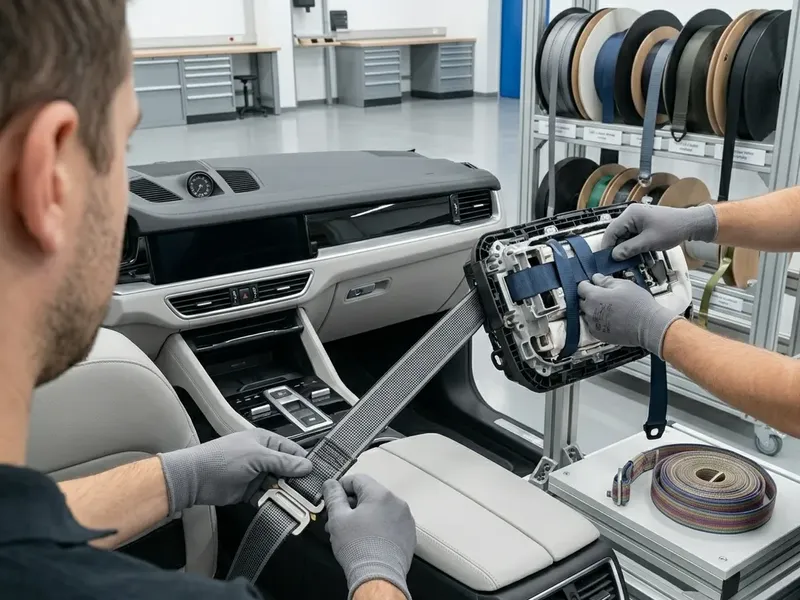
Industry Image
Automotive Industry
Automotive Industry Products
Explore our webbing products engineered for the automotive industry industry. Click any product for detailed technical specifications.
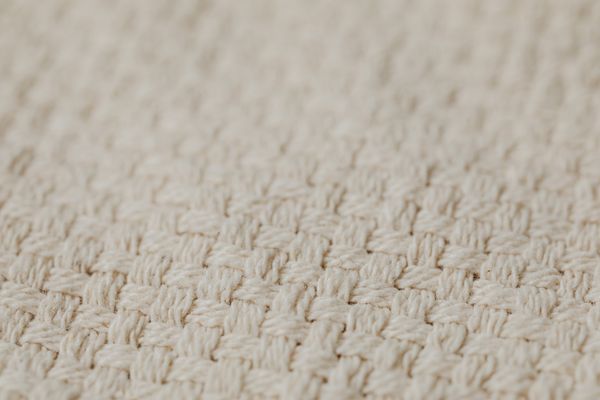 Automotive Grade NW-SB-003
 Seat Belt Nylon Webbing
Automotive-grade nylon webbing engineered for seat belts and occupant restraint systems.
Automotive Grade PW-SB-002 Seat Belt Polyester Webbing
Automotive-grade polyester webbing designed for seat belts and occupant restraint systems.
Industry Details
Detailed description and technical context for Automotive Industry.
Overview
The automotive industry represents one of the largest manufacturing sectors globally, producing over 90 million vehicles annually, with the global automotive safety systems market valued in excess of USD 100 billion and growing steadily as regulatory bodies tighten occupant protection standards. Webbing is a critical structural component within this ecosystem, forming the load-bearing element of seat belts, airbag tethers, and cargo restraint systems where failure is not an option. For manufacturers and Tier 1/Tier 2 suppliers, webbing must meet rigorous certification standards such as FMVSS 209, ECE R16, and ISO 9001, making material selection, consistency, and traceability essential to compliance and end-user safety.
Key Requirements & Specifications
- Tensile/breaking strength: Seat belt webbing must sustain a minimum breaking strength of 6,000 lbs (approximately 26.7 kN), with heavy-duty and cargo restraint applications requiring 8,000 to 12,000 lbs (35.6 to 53.4 kN) depending on load rating and vehicle class.
- Standard width: Automotive seat belt webbing is standardized at 46 mm to 48 mm to match retractor and buckle hardware, while airbag tethers and internal restraints range from 20 mm to 25 mm. Cargo restraint webbing is typically supplied at 25 mm, 50 mm, and 75 mm.
- Elongation: Controlled elongation of 8 to 15 percent at rated load is required to absorb crash energy progressively; polyester is specified where lower elongation (below 12 percent) and dimensional stability are priorities.
- Thickness and density: Standard webbing thickness ranges from 1.0 mm to 1.4 mm, with a fabric weight tuned to ensure smooth spooling through retractors without jamming.
- Abrasion resistance: Webbing must withstand a minimum of 2,000 cycles under standardized abrasion testing to endure repeated buckling, retraction, and contact with vehicle hardware over the product lifecycle.
- UV and weathering resistance: Materials must retain a minimum of 60 percent of original breaking strength after prolonged UV exposure, critical for cargo systems and interior components subject to sunlight through glass.
- Temperature range: Continuous performance from -40°C to +90°C is required, with resistance to short-term spikes during airbag deployment; webbing must not become brittle at low temperatures or lose tensile integrity at elevated cabin temperatures.
Recommended Webbing Solutions
Seat Belt Nylon Webbing is the traditional choice for occupant restraint due to its high energy absorption and controlled elongation, which allows the belt to stretch progressively during impact and reduce peak forces transmitted to the occupant. Its inherent abrasion resistance and smooth surface make it well suited to repeated retractor cycling in passenger vehicles.
Seat Belt Polyester Webbing offers lower elongation and superior dimensional stability, making it appropriate where minimal stretch and consistent geometry are required, and it provides stronger resistance to UV degradation and moisture than nylon. This makes it a preferred option for applications exposed to sunlight or humidity over long service periods.
Heavy Duty Nylon Webbing is engineered for high-load applications such as cargo restraint and commercial vehicle securing systems, delivering breaking strengths of 8,000 lbs and above while retaining the shock-absorbing characteristics of nylon for dynamic load conditions. It is recommended where sudden load shifts must be cushioned to protect both cargo and anchor points.
Heavy Duty Polyester Webbing suits cargo and tie-down systems that demand minimal stretch under sustained tension, ensuring loads remain tightly secured without loosening over distance. Its excellent UV and abrasion resistance make it the durable choice for exterior and flatbed cargo restraint exposed to the elements.
Industry Applications
- Wheelchair and accessibility restraint systems: Securement webbing used in adapted vehicles and public transport to anchor mobility devices and occupants, demanding consistent breaking strength and reliable buckle compatibility.
Customization & Wholesale
WebbingMaker supplies automotive-grade webbing to global wholesale and bulk buyers with a standard minimum order quantity of 500 meters per specification, with tiered pricing that improves at 5,000 meters and full-container volumes. Custom widths are available from 10 mm to 100 mm to match specific hardware, retractor, and anchor requirements, with tolerances held to ±0.5 mm for consistent hardware compatibility.
Color customization is offered against Pantone references with low color-lot variation, and additional colors can be developed for OEM branding or fleet identification. Custom printing and jacquard weaving are available for logos, load ratings, batch codes, and directional markings, supporting both traceability and brand requirements. OEM and ODM services cover bespoke weave patterns, edge finishing, coating, and treatment for flame retardancy, UV stabilization, and chemical resistance tailored to the buyer's certification targets.
Standard production lead times run 15 to 25 days for stock specifications and 25 to 40 days for fully customized orders, depending on volume, treatment, and testing requirements. Sample lead time is typically 5 to 7 days. All automotive webbing is produced under ISO 9001 quality management with batch-level traceability, and material can be manufactured to align with FMVSS 209, ECE R16, and FMVSS 302 flammability requirements where specified by the buyer.
Export capabilities include worldwide shipping via FOB, CIF, and EXW terms from major Chinese ports, with full documentation support covering certificates of origin, material test reports, and compliance declarations. Packaging options include rolls, spools, and reels with moisture-resistant wrapping for long-distance freight, and consolidated shipments are available for buyers sourcing multiple specifications or coordinating with other product lines.
Need Automotive Industry Solutions?
Our engineering team understands the unique compliance and performance requirements of the automotive industry sector.
Request a Technical Quote