Automotive Manufacturing

Industry Image
Automotive Manufacturing
Automotive Manufacturing Products
Explore our webbing products engineered for the automotive manufacturing industry. Click any product for detailed technical specifications.
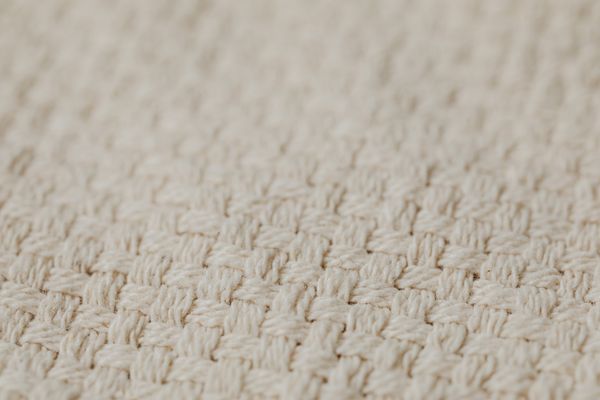 Automotive Grade NW-SB-003
 Seat Belt Nylon Webbing
Automotive-grade nylon webbing engineered for seat belts and occupant restraint systems.
Automotive Grade PW-SB-002 Seat Belt Polyester Webbing
Automotive-grade polyester webbing designed for seat belts and occupant restraint systems.
Soft Touch EW-KN-002 Knitted Elastic Webbing
Soft knitted elastic webbing for apparel, medical and consumer product applications.
Industry Details
Detailed description and technical context for Automotive Manufacturing.
Overview
Automotive manufacturing is one of the largest industrial sectors globally, with annual vehicle production exceeding 90 million units and a supply chain that spans OEMs, Tier 1 and Tier 2 suppliers, and aftermarket producers. Webbing is a critical safety and structural textile within this sector, used most prominently in occupant restraint systems where it must meet strict regulatory standards such as FMVSS 209/210, ECE R16, and GB 14166 in China. Beyond restraint, webbing serves in interior trim, cargo management, and assembly processes, making it a high-volume, specification-driven component for automotive buyers who require consistency, traceability, and certification.
Key Requirements & Specifications
- Tensile/breaking strength: Seat belt webbing must typically withstand a minimum breaking load of 26.7 kN (approximately 6,000 lbs), with heavy-duty and commercial applications specifying 30 kN or more (approximately 6,700–8,000 lbs) to meet FMVSS 209 and ECE R16 thresholds.
- Standard width: Automotive seat belt webbing is standardized at 46–48mm (approximately 1.8 inches) for occupant restraints; secondary applications such as trim, harnesses, and cargo straps commonly use 25mm, 38mm, or 50mm widths.
- Thickness: Restraint webbing generally runs 1.0–1.4mm thick to balance strength, spool retraction behavior, and comfort against the occupant.
- Elongation at break: Seat belt webbing requires controlled elongation of 8–15% at a specified load to absorb crash energy while limiting occupant excursion, a key differentiator between polyester and nylon constructions.
- Abrasion resistance: Webbing must endure repeated retractor cycling and buckle friction, with testing to standards requiring survival of 2,500+ abrasion cycles without significant strength loss.
- UV and weathering resistance: Interior-exposed webbing must retain a minimum of 60% of original breaking strength after prolonged UV exposure (e.g., 100+ hours of accelerated weathering) to resist degradation from sunlight through windows.
- Temperature range: Automotive webbing must remain functional across a service range of approximately -40°C to +85°C, and up to +120°C for components near heat sources, without embrittlement or excessive relaxation.
- Chemical and colorfastness resistance: Resistance to automotive fluids (oils, cleaners, mild solvents) and colorfastness ratings of grade 4 or higher on the gray scale after light and rubbing exposure are standard requirements.
Recommended Webbing Solutions
Seat Belt Polyester Webbing: Polyester is the dominant choice for modern occupant restraint systems because of its low water absorption, superior UV and abrasion resistance, and dimensional stability. Its controlled, lower elongation profile makes it well-suited to meeting current crash-energy management requirements in passenger vehicles.
Seat Belt Nylon Webbing: Nylon offers higher energy absorption through greater elongation, making it appropriate for applications where progressive load management is desired, as well as for legacy specifications and certain commercial vehicle restraint systems. Its high tensile strength and toughness support demanding cyclic loading.
Heavy Duty Nylon Webbing: This solution targets high-load applications such as commercial vehicle harnesses, cargo restraint, and towing or recovery straps within the automotive supply chain. With breaking strengths reaching 30 kN and above (up to approximately 8,000 lbs), it is specified where standard passenger-car webbing is insufficient.
Knitted Elastic Webbing: Knitted elastic webbing is used in interior trim, seat construction, headrest and cushion retention, and organizer pockets where controlled stretch and recovery are required. It provides consistent elasticity for non-structural applications while maintaining a clean finished appearance for visible trim.
Nylon Webbing and Polyester Webbing (categories): Beyond restraint-grade products, our broader nylon and polyester webbing categories supply harness straps, cargo tie-downs, assembly-line handling straps, and interior trim components across a range of widths and load ratings, allowing buyers to consolidate multiple automotive needs with a single supplier.
Industry Applications
- Occupant restraint systems: The primary application is three-point and lap seat belts for passenger cars, SUVs, and light trucks, where restraint-grade polyester or nylon webbing must pass regulated crash and load testing before assembly into retractors and buckles.
- Commercial and heavy vehicle harnesses: Trucks, buses, agricultural, and construction vehicles use heavier restraint and harness webbing, including four-point and five-point configurations, where heavy-duty nylon provides the required higher breaking strength.
- Interior trim and seating: Elastic and standard webbing is used within seat suspension systems, cushion and headrest retention, door and seatback organizer pockets, and decorative trim, where appearance, stretch recovery, and colorfastness matter.
- Cargo management and tie-downs: Trunk, cargo area, and utility vehicle tie-down straps and load-securing systems use polyester and heavy-duty nylon webbing rated for repeated tensioning and outdoor exposure.
- Assembly and material handling: Within manufacturing plants, durable webbing is used for component handling straps, protective covers, and line fixtures that require abrasion resistance and consistent dimensions.
- Aftermarket and replacement components: Replacement seat belt assemblies, racing and performance harnesses, and retrofit restraint kits rely on certified webbing that matches or exceeds original equipment specifications.
Customization & Wholesale
Minimum order quantity: Standard MOQ is 500m per specification for in-stock constructions, with custom-engineered webbing typically starting at 3,000–5,000m per color and width to justify dedicated loom and dye setup. Volume pricing tiers are available at 10,000m, 50,000m, and 100,000m+ for OEM and Tier 1 programs.
Custom widths and constructions: We produce webbing in widths from 10mm to 100mm, with custom weave densities, thicknesses (0.8–2.0mm), and edge finishes engineered to target breaking strength and elongation values. Both restraint-grade and non-structural constructions can be tailored to customer drawings and test requirements.
Colors and printing: Custom color matching to Pantone or customer swatches is available, along with woven-in stripes, jacquard patterns, and printed logos or part identifiers for branding and traceability. Standard colorfastness targets of grade 4+ are maintained across custom dye lots.
OEM and private label: We support OEM and ODM programs including customer-specified yarn sources, construction to internal engineering standards, part marking, and packaging under the buyer's brand. Documentation packages including test reports, material certifications, and batch traceability are provided for regulated applications.
Lead time: Sample lead time is typically 7–15 days. Bulk production lead time runs 15–30 days for standard constructions and 30–45 days for fully custom-engineered restraint-grade webbing, depending on order volume and testing requirements.
Export capabilities: As a China-based manufacturer, we ship worldwide under FOB, CIF, and EXW terms, with experience serving buyers across North America, Europe, Southeast Asia, and the Middle East. We provide full export documentation, consolidated container loading, and compliance support for destination-market standards, enabling wholesale and bulk buyers to source certified automotive webbing at competitive volume pricing.
Need Automotive Manufacturing Solutions?
Our engineering team understands the unique compliance and performance requirements of the automotive manufacturing sector.
Request a Technical Quote