Furniture Industry
Industry Image
Furniture Industry
Furniture Industry Products
Explore our webbing products engineered for the furniture industry industry. Click any product for detailed technical specifications.
 Heavy Duty CW-HD-001
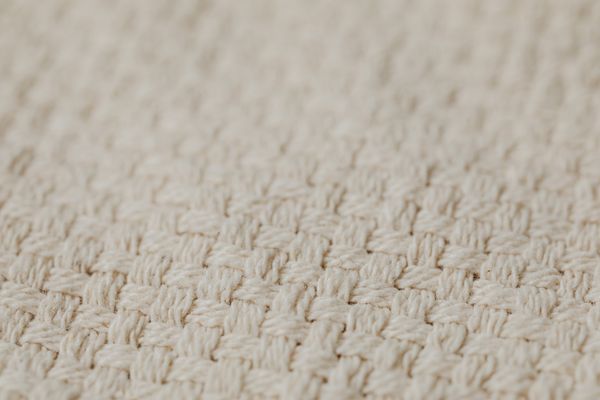
 Heavy Duty Cotton Webbing
Durable heavy-duty cotton webbing designed for furniture, bags and industrial applications.
Excellent PW-HD-001 Heavy Duty Polyester Webbing
Industrial-grade polyester webbing designed for heavy-load applications and demanding outdoor environments.
Industry Details
Detailed description and technical context for Furniture Industry.
Overview
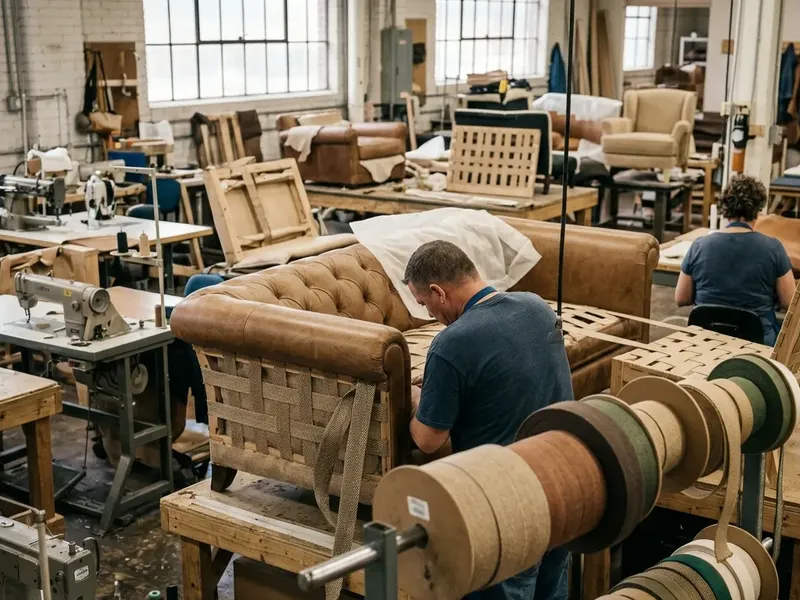
The global furniture industry represents a market valued at over USD 700 billion annually, spanning residential seating, upholstered furniture, office furniture, and outdoor/patio segments. Webbing serves as a core structural and support component in furniture manufacturing, forming the suspension platform beneath seat cushions, reinforcing frames, and providing tension-based load distribution across sofas, chairs, recliners, and bench seating. Because furniture must withstand years of repeated loading, weight cycling, and continuous tension, the quality and specification of webbing directly determine seat firmness, sag resistance, and overall product lifespan.
Key Requirements & Specifications
- Tensile/breaking strength: Furniture support webbing typically requires a minimum breaking strength of 600 to 2,000 lbs (2.7 to 8.9 kN) depending on application, with heavy-duty seating webbing engineered to exceed 3,000 lbs (13.3 kN) for high-load commercial and sectional furniture.
- Width range: Standard furniture webbing is produced in 25mm, 38mm, 50mm, and 75mm widths, with 50mm (2 inch) being the most common for seat suspension; custom widths from 10mm to 100mm are available for specialized frames.
- Thickness and weight: Typical webbing thickness ranges from 1.2mm to 3.0mm, with areal weight between 180 g/m and 450 g/m depending on weave density and fiber content.
- Elongation: Elastic support webbing is designed for 40 to 60 percent stretch under rated load for cushioned seating comfort, while non-elastic reinforcement webbing is held below 8 percent elongation to maintain frame stability.
- Abrasion resistance: Webbing must withstand a minimum of 20,000 to 50,000 rub cycles (Martindale-equivalent) to resist wear from repeated seat compression and frame contact.
- UV and environmental resistance: For outdoor and patio furniture, polyester webbing should retain at least 80 percent of tensile strength after 500 hours of UV exposure, with resistance to mildew and moisture absorption below 1 percent.
- Temperature range: Functional performance is maintained across a service range of -30°C to +80°C, ensuring dimensional stability in both cold storage/transport and heated indoor environments.
- Chemical resistance: Polyester-based webbing offers resistance to mild acids, alkalis, and common upholstery cleaning solvents, with minimal degradation from oils and household detergents.
Recommended Webbing Solutions
Heavy Duty Polyester Webbing is the primary recommendation for structural seat suspension and high-load furniture frames. Its high tensile strength (up to 8,000 lbs in reinforced constructions), low moisture absorption, and strong UV stability make it suitable for both indoor upholstered seating and outdoor furniture exposed to sunlight and humidity.
Heavy Duty Cotton Webbing suits traditional and premium upholstered furniture where a natural feel, breathability, and firm non-stretch support are preferred. It provides reliable load-bearing for frame reinforcement and hand-tacked seat platforms, and it accepts staples and tacks without splitting.
Woven Elastic Webbing is designed for cushioned seating suspension where controlled stretch is required. Its 40 to 60 percent elongation delivers responsive, comfortable seat support in sofas, armchairs, and recliners, distributing body weight evenly and reducing cushion sag over time.
Natural Cotton Webbing is recommended for eco-conscious and heritage-style furniture lines, offering a soft natural fiber option for lighter-duty seating, decorative trim, and internal binding where sustainability and a natural aesthetic are priorities.
Industry Applications
- Sofa and sectional seat suspension: Elastic and heavy-duty webbing is stretched across the seat frame to form the primary support platform beneath foam and cushions, replacing or supplementing coil-spring systems in modern upholstered furniture.
- Armchair and recliner seat/back support: Woven elastic webbing provides flexible, weight-distributing tension in seat bases and backrests, maintaining comfort through repeated reclining cycles.
- Dining and occasional chair reinforcement: Non-stretch cotton and polyester webbing reinforces wooden and metal frames, stabilizing joints and load points in high-use residential and hospitality seating.
- Outdoor and patio furniture: UV-stabilized polyester webbing is used in sling chairs, loungers, and outdoor seating where sun, rain, and temperature swings demand weather-resistant, colorfast material.
- Office and contract furniture: Heavy-duty webbing supports task chairs, waiting-room seating, and institutional furniture that must meet elevated durability standards for continuous commercial use.
- Bed frames and ottoman bases: Webbing forms the tensioned support layer in upholstered bed foundations, storage ottomans, and bench seating, providing quiet, resilient load-bearing without rigid slats.
Customization & Wholesale
WebbingMaker supplies furniture webbing on wholesale and OEM terms tailored to bulk buyers, manufacturers, and importers. Minimum order quantity starts at 500 meters per specification for standard stock constructions, with lower MOQs available on selected in-stock widths and higher-volume tiered pricing for orders above 10,000 meters.
Custom widths are produced from 10mm to 100mm, and custom colors are matched to Pantone references with a typical dye-lot minimum of 3,000 meters per color. Custom logo printing, jacquard weaving, and woven-in branding are available for OEM buyers, along with private-label packaging and roll lengths cut to customer specification (standard put-up of 50m, 100m, or 500m rolls).
Fiber content, weave density, elongation rating, and breaking strength can be engineered to buyer specifications, allowing tailored performance for elastic seating support, non-stretch reinforcement, or weather-resistant outdoor applications. Sample development and pre-production approval samples are provided prior to bulk runs.
Standard lead time is 15 to 25 days for stock constructions and 25 to 40 days for fully custom orders, depending on quantity, dyeing, and printing requirements. Export capabilities cover global shipping via FOB, CIF, and EXW terms from major Chinese ports, with support for standard export documentation, container-load and LCL consolidation, and compliance with common international textile and safety standards for furniture components. Buyers receive material test reports and specification sheets to support quality verification and customs clearance.
Need Furniture Industry Solutions?
Our engineering team understands the unique compliance and performance requirements of the furniture industry sector.
Request a Technical Quote