Safety Protection Industry
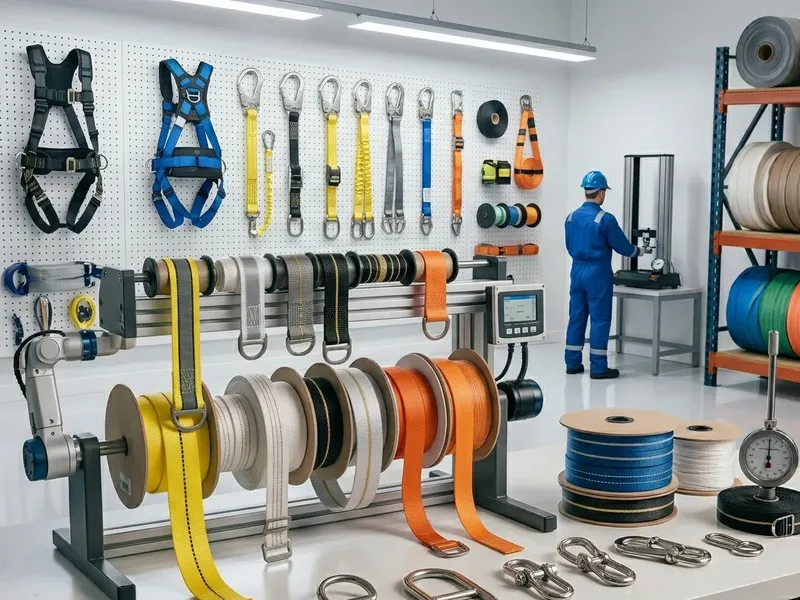
Industry Image
Safety Protection Industry
Safety Protection Industry Products
Explore our webbing products engineered for the safety protection industry industry. Click any product for detailed technical specifications.
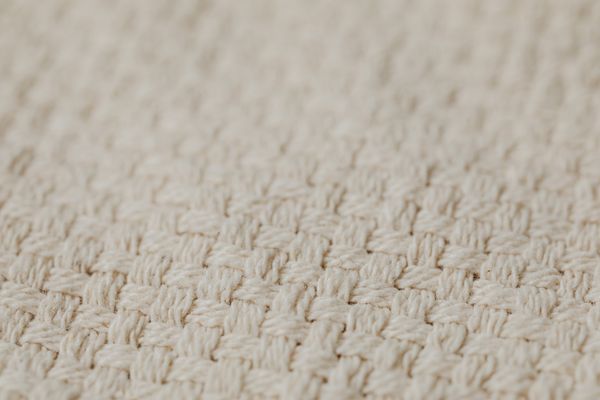 High Reliability UW-SH-004
 UHMWPE Safety Harness Webbing
High-performance UHMWPE webbing engineered for fall protection and safety harness systems.
Professional Grade AW-SH-005 Aramid Safety Harness Webbing
Professional aramid webbing developed for high-temperature safety harness systems.
Heavy Duty NW-HD-004 Heavy Duty Nylon Webbing
High-strength nylon webbing designed for industrial lifting, safety equipment and outdoor applications.
Industry Details
Detailed description and technical context for Safety Protection Industry.
Overview
The safety protection industry encompasses personal fall-arrest systems, industrial harnesses, positioning lanyards, and load-restraint equipment used across construction, oil and gas, wind energy, telecommunications, and general manufacturing. The global fall protection equipment market is valued in the range of 3 to 4 billion USD and continues to expand as workplace safety regulations tighten across North America, Europe, and Asia-Pacific. Webbing is the load-bearing backbone of nearly every fall-arrest and positioning device, meaning certified break strength, controlled elongation, and predictable long-term durability directly determine whether a harness or lanyard meets legal certification and protects the end user.
Key Requirements & Specifications
- Minimum breaking strength for primary structural webbing should meet or exceed 6,000 lbs (approximately 27 kN) for fall-arrest applications, with heavy-duty configurations reaching 8,000 to 9,000 lbs (36 to 40 kN) to satisfy ANSI Z359.11 and EN 361 harness requirements.
- Standard webbing widths for safety harnesses range from 44mm to 45mm (1.75 inches), while positioning and restraint straps commonly use 25mm, 38mm, and 50mm widths depending on buckle and hardware compatibility.
- Nominal thickness typically falls between 1.8mm and 3.0mm, balancing tensile capacity against flexibility for stitching, buckle threading, and comfortable body contact.
- UV resistance must retain at least 80 to 85 percent of original tensile strength after 500 hours of accelerated weathering (xenon-arc or QUV testing), since fall-protection equipment is frequently used in prolonged outdoor exposure.
- Abrasion resistance should withstand a minimum of 10,000 to 15,000 cycles under standardized Martindale or comparable testing without structural fiber failure, as edge abrasion is a leading cause of field degradation.
- Operating temperature range should span -40°C to +80°C for nylon and UHMWPE constructions, with aramid webbing extending continuous service to +200°C and short-term exposure tolerance up to +250°C for heat and spark environments.
- Controlled elongation is required: fall-arrest webbing should exhibit 5 to 12 percent elongation at rated load to help absorb shock, while positioning webbing is typically specified with lower stretch for stability.
- Chemical resistance to weak acids, alkalis, oils, and hydrocarbons is essential; aramid and UHMWPE offer superior resistance to solvents and cutting hazards compared with standard polyester or polypropylene alternatives.
Recommended Webbing Solutions
UHMWPE Webbing (including UHMWPE Safety Harness Webbing) delivers one of the highest strength-to-weight ratios available, allowing thinner, lighter straps that still meet or exceed fall-arrest break-strength thresholds. Its excellent cut resistance and low moisture absorption make it well suited to marine, wind-energy, and offshore harness applications where weight reduction and abrasion durability are priorities.
Aramid Webbing (including Aramid Safety Harness Webbing) is the preferred choice where heat, flame, and spark exposure are present, such as welding, foundry work, and firefighting-adjacent rescue systems. It maintains structural integrity at sustained temperatures around +200°C and resists flame propagation, making it appropriate for harnesses and lanyards used near thermal hazards.
Nylon Webbing, offered as both Heavy Duty Nylon Webbing and Seat Belt Nylon Webbing, provides high tensile strength combined with natural shock-absorbing elongation, which is advantageous for fall-arrest lanyards and energy-absorbing components. Seat Belt Nylon Webbing supplies a smooth, dense weave with consistent break strength suited to restraint and positioning devices, while Heavy Duty Nylon Webbing serves demanding load-bearing straps requiring both strength and controlled stretch.
Industry Applications
Full-body fall-arrest harnesses for construction and steel erection rely on 44mm to 45mm certified webbing rated above 6,000 lbs to distribute arrest forces across the shoulders, thighs, and dorsal D-ring during a fall event.
Shock-absorbing and positioning lanyards use nylon or UHMWPE webbing to connect the worker to an anchor point, where controlled elongation and high break strength limit the peak force transmitted to the body during arrest.
Wind turbine and tower-climbing equipment benefits from lightweight UHMWPE webbing, reducing the load a technician carries during long vertical ascents while maintaining the abrasion resistance needed for repeated contact with ladder and rail structures.
Oil, gas, and refinery confined-space rescue systems require webbing with strong chemical and hydrocarbon resistance, using aramid or UHMWPE constructions that withstand solvent exposure and elevated temperatures without losing rated strength.
Welding, foundry, and hot-work harnesses use aramid webbing to resist sparks, molten splash, and radiant heat, preventing the strap failure that standard synthetic webbing would experience near thermal hazards.
Telecommunications and utility pole-climbing positioning belts use 38mm to 50mm nylon webbing for stability and comfort during extended overhead work, combining durability with the elongation characteristics that reduce fatigue and shock loading.
Customization & Wholesale
Minimum order quantity for standard stock webbing starts at 500m per specification, with custom-engineered constructions typically beginning at 1,000m to 3,000m depending on fiber type and weave complexity. Bulk pricing tiers improve significantly at volumes of 10,000m and above, and container-scale orders can be scheduled against forecasted production runs.
Custom widths are available from 10mm up to 100mm, with common safety widths of 25mm, 38mm, 44mm, and 50mm held as standard tooling. Custom colors can be matched to Pantone references, with dope-dyed and solution-dyed options offered for superior UV colorfastness on outdoor equipment. Logo and text printing, jacquard-woven branding, and integrated tracer threads are available for OEM identification and traceability.
OEM and ODM services include custom break-strength engineering, tailored elongation profiles, edge treatments, heat-set finishing, and coordination with your certification requirements for ANSI Z359, EN 361, EN 354, and EN 358 compliance testing. Sample development and pre-production lots can be arranged for validation before full production release.
Standard lead time is 15 to 25 days for stock constructions and 25 to 40 days for fully customized orders, subject to fiber availability and testing requirements. Export capabilities cover FOB and CIF shipping terms from major Chinese ports, with documentation support including certificates of analysis, material test reports, and compliance declarations for import into North American, European, and Asia-Pacific markets. Standard packaging is on spools or in coils with moisture-protective wrapping, and container consolidation is available for mixed-specification wholesale orders.
Need Safety Protection Industry Solutions?
Our engineering team understands the unique compliance and performance requirements of the safety protection industry sector.
Request a Technical Quote